

Hey crypto trader! If you’re diving into the wild world of Bitcoin, Ethereum, altcoins, or any crypto in 2026, TradingView is probably your go-to charting platform. It’s free to start, super powerful, and loaded with indicators that can help you spot trends, momentum shifts, volatility squeezes, and more—without needing fancy paid tools right away.
But with thousands of indicators available, it’s easy to get overwhelmed. The key? Stick to the classics that actually work in crypto’s 24/7, high-volatility environment. These five essentials show up again and again in pro setups, community scripts, and 2026 guides: Moving Averages, RSI, MACD, Bollinger Bands, and Volume. They’re built-in, easy to add, and combine beautifully for better decisions.
In this guide, we’ll cover each one step-by-step: what it is, why it’s great for crypto, default/best settings, and practical ways to use it on TradingView. Let’s make your charts smarter!
If you’re ready to level up your TradingView account (more indicators, alerts, no ads—worth it for serious crypto trading), grab a free trial here: Join TradingView
1. Moving Averages (MA) – Your Trend Compass
Moving Averages smooth out price noise to show the overall direction—perfect for crypto’s choppy trends.
Why essential for crypto? Crypto loves strong trends (bull runs, dumps), but also fakeouts. MAs help filter “is this uptrend real?” Use EMAs (Exponential) over SMAs—they react faster to recent price action in volatile markets.
How to add on TradingView:
- Click “Indicators” (fx icon) > search “Moving Average” or “EMA”.
- Default: EMA 9, 21, 50, or 200.
- Popular crypto setup: EMA 9 (fast), EMA 21 (medium), EMA 50/200 (long-term).
How to use it:
- Golden Cross: Fast EMA (9/21) crosses above slow EMA (50/200) → bullish signal (potential buy/long).
- Death Cross: Fast crosses below slow → bearish (consider exits or shorts).
- Trend filter: Only take longs when price is above EMA 200 (bull market bias); shorts below.
- Support/resistance: Price often bounces off EMAs in trends.
Pro tip for 2026: On BTC or ETH daily charts, watch for price “riding” the EMA 50 during strong uptrends—great confirmation to hold.

BTC Trend – EMA Crossover + RSI — Strategy by connorgeary150 — TradingView
See this BTC chart with EMA crossover + RSI—green buys when fast crosses up, filtered by RSI.
2. RSI (Relative Strength Index) – Spot Overbought/Oversold
RSI measures momentum on a 0-100 scale—classic for finding exhaustion points.
Why crypto traders love it: Crypto swings hard—RSI spots when buyers are tired (overbought >70) or sellers exhausted (oversold <30). Divergences (price higher high but RSI lower high) scream reversals.
How to add:
- Indicators > “RSI” (default length 14).
- Crypto tweak: Length 14 still king, but some use 9-21 for faster signals.
How to use it:
- Overbought (>70): Potential sell/short—especially if price hits resistance.
- Oversold (<30): Potential buy/long—wait for bullish candle confirmation.
- Divergence: Bullish (price lower low, RSI higher low) → reversal up. Bearish opposite.
- Centerline (50): Above 50 = bullish bias; below = bearish.
Combine with MAs: Only buy oversold RSI if price above key EMA.

A Comprehensive Guide to the MACD for BITSTAMP:BTCUSD by XForceGlobal — TradingView
RSI divergences shine on crypto charts—watch for hidden strength/weakness.
3. MACD (Moving Average Convergence Divergence) – Momentum King
MACD shows relationship between two EMAs, with a histogram for visual momentum.
Why great for crypto: Captures momentum shifts fast in 24/7 markets—crossovers and histogram zero-line crosses give clear entries/exits.
How to add:
- Indicators > “MACD” (default 12, 26, 9).
- Crypto pros sometimes tweak to 24, 52, 18 for less noise.
How to use it:
- Line crossover: MACD line crosses above signal line → bullish (buy). Below → bearish (sell).
- Zero-line cross: Above zero = bullish momentum; below = bearish.
- Histogram: Growing bars = strengthening trend; shrinking = weakening (divergence potential).
- Divergence: Like RSI—price new high but MACD lower → bearish reversal.
Use on 4H/daily for swing trades; lower TFs for scalping.

Moving Average Convergence / Divergence (MACD) — Trading Ideas on TradingView
Classic MACD on BTC—note crossovers and histogram shifts for momentum changes.
4. Bollinger Bands – Volatility Squeeze Detector
Bollinger Bands = middle SMA (usually 20) + upper/lower bands (2 standard deviations).
Why crypto essential: Crypto has insane volatility—bands “squeeze” (narrow) during consolidation, then explode on breakouts. “Walking the bands” shows strong trends.
How to add:
- Indicators > “Bollinger Bands” (default 20, 2).
- Crypto tweak: Length 20-25; deviation 2-2.5.
How to use it:
- Squeeze: Bands narrow → low vol, impending big move. Watch for breakout direction.
- Breakout: Price closes outside band → potential trend start (confirm with volume/MACD).
- Trend riding: In uptrend, price hugs upper band—strong bulls.
- Reversal: Price touches lower band in downtrend + oversold RSI → bounce potential.
Combine: Squeeze + RSI oversold + MA support = high-probability long.
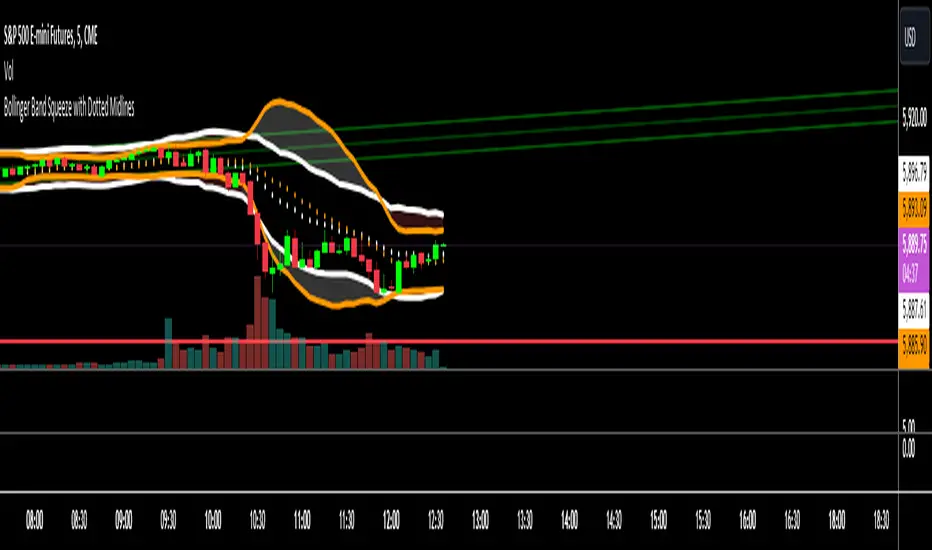
Bollinger Band Squeeze with Dotted Midlines — Indicator by PrestigeWorldwideTradingCo — TradingView
Bollinger Band squeeze example—narrow bands lead to explosive moves.
5. Volume – The Confirmation King
Volume shows trading activity—higher volume validates moves.
Why crucial in crypto: Fake pumps/dumps often have low volume. Real breakouts spike volume.
How to add:
- Bottom panel: Click “+” > “Volume” (built-in).
- Or search “Volume” for advanced like Volume Profile.
How to use it:
- Breakout confirmation: Price breaks resistance + high volume → real move.
- Divergence: Price higher high but volume lower → weakening trend.
- Climactic volume: Massive spikes at tops/bottoms → potential exhaustion.
- Average volume: Compare current to 20-period MA—above average = strong interest.
Pro: Use with any indicator—e.g., MACD crossover + volume spike = stronger signal.
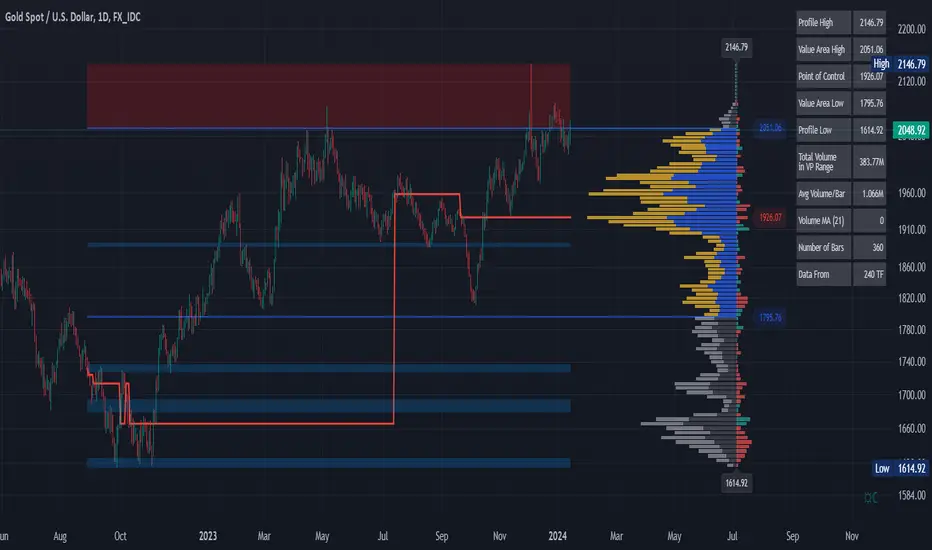
Volume Profile and Volume Indicator by DGT by dgtrd — TradingView
Volume profile on crypto shows key levels—high volume nodes act as support/resistance.
Putting It All Together: A Simple Crypto Setup
Start with:
- EMA 50/200 for trend bias.
- RSI for overbought/oversold + divergence.
- MACD for momentum crossovers.
- Bollinger Bands for volatility/breakouts.
- Volume to confirm everything.
Example strategy: Bullish if price > EMA 200, RSI >50, MACD crossover up, Bollinger expansion up + volume spike → long with stop below recent low.
Don’t overload—start with 2-3, master them, add more. Practice on historical crypto charts with replay mode.
Crypto trading is risky—use these as tools, not guarantees. Combine with risk management (1-2% per trade) and news awareness.
Which indicator do you use most? Drop a comment! And upgrade your TradingView for unlimited layouts/alerts via Join TradingView.
Happy trading—may your bags be green!


